Play It Anyway: Why Emulation Has Become the Only Real Ticket to Asia's Gaming Backlog
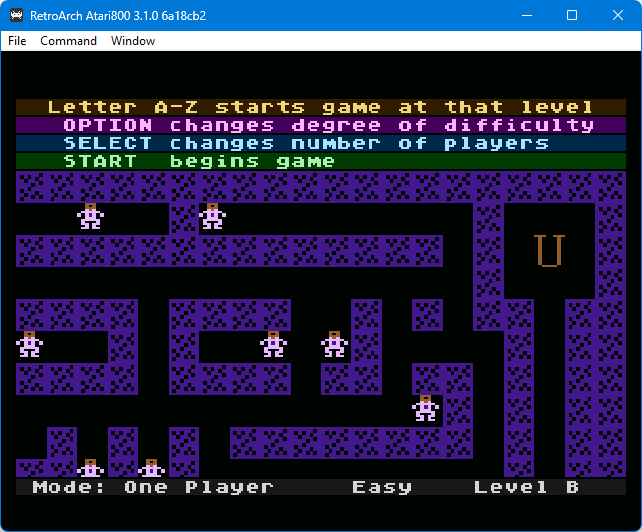
Photo: John Howard Palevich, Apache License 2.0, via Wikimedia Commons
Let's be honest about something: if you want to play a wide swath of Japan's Super Famicom library, a deep cut from a Korean PC-98 developer, or virtually anything from Taiwan's early console scene, your realistic options are pretty narrow. You can spend hundreds of dollars on import hardware and physical media. You can hope that some boutique publisher decides your niche taste is worth a localization budget. Or you can fire up an emulator and be playing in about four minutes.
For most American gamers, option three wins. Every time.
That's not a moral judgment — it's a market reality. And the fact that emulation has quietly become the primary pipeline through which US players discover and consume obscure East Asian titles says something pretty damning about how the legitimate industry has handled its own catalog.
The Licensing Graveyard Nobody Wants to Talk About
Here's the part that gets frustrating when you actually dig into it. The games aren't gone. The code exists. Preservation groups have documented tens of thousands of titles across platforms that never made it stateside. The problem isn't availability in any technical sense — it's that the legal and commercial infrastructure around those games has completely collapsed.
Publishers fold. Parent companies absorb subsidiaries and then lose track of what IP they actually own. Licensing agreements between hardware manufacturers and software developers expire or become contested. A game that was perfectly legal to sell in 1994 might now exist in a kind of corporate purgatory where nobody can definitively say who holds the rights — which means nobody's going to spend money figuring it out just to sell a thirty-year-old RPG to a niche audience.
"The honest answer is that a significant percentage of games from the 16-bit and early 32-bit era are what lawyers call 'orphan works,'" says one intellectual property attorney who works with indie developers and has consulted informally with preservation groups. "The rights holder either can't be identified, can't be located, or has no commercial interest in asserting those rights. That creates a vacuum. And nature — and emulation communities — abhors a vacuum."
That vacuum is enormous. Estimates from preservation organizations like the Video Game History Foundation suggest that roughly 87 percent of classic games are out of print and commercially unavailable. When you filter that down to East Asian titles that also never received Western releases, the number gets even more grim.
What Emulation Actually Looks Like in Practice
Talk to anyone embedded in these communities and the picture that emerges isn't some shadowy piracy ring. It's closer to a digital library staffed by obsessives.
Forums dedicated to specific hardware — the PC-88, the MSX, the Sharp X68000 — function as living archives. Members track down original software, document regional variations, write compatibility guides, and in many cases create the English-language documentation that helps Western players understand what they're even playing. Fan translators (a topic we've covered extensively here) frequently work hand-in-hand with emulation communities, because a translation patch isn't much use without a reliable way to run the game.
The legal exposure for these communities is real but weirdly uneven. Emulators themselves — the software that replicates hardware — have generally survived court scrutiny in the US, most notably after the Bleem! case in the early 2000s established that reverse-engineered emulation doesn't inherently infringe copyright. The ROM files are a different story. Hosting and distributing game files without authorization is legally indefensible regardless of the game's commercial status, which is why major ROM sites operate in constant legal jeopardy and why Nintendo periodically nukes them with takedown campaigns.
But here's the uncomfortable irony: Nintendo's aggressive enforcement actions against ROM sites have done almost nothing to reduce access. They've just pushed the ecosystem toward decentralized distribution — torrents, private servers, direct sharing — that's harder to target and, arguably, harder to monitor for the kind of context and documentation that made the old sites useful.
Publishers Created This Problem
It would be easy to frame emulation as a demand-side failure — gamers just don't want to pay for things. But that framing ignores the supply-side catastrophe that preceded it.
Consider the sheer volume of Japanese games that have never received official English releases despite obvious Western appetite. The Mother series. Countless entries in long-running franchises that got their first two games localized and then went dark. Visual novels, tactical RPGs, and action games that sold well in Japan and simply never crossed the Pacific because publishers calculated the localization cost wasn't worth the return.
That calculation made sense in 1998. It makes much less sense now, when digital storefronts eliminate physical distribution costs, when fan translation communities have already done the hardest linguistic work for free, and when there's demonstrable demand from a generation of American gamers who grew up reading about these games in import magazines and YouTube retrospectives.
Some publishers have started to get it. NIS America, Aksys, and a handful of others have built businesses specifically around bringing niche Japanese titles to Western audiences. Nintendo's own Virtual Console — when it existed — proved that there was money in the catalog. But these efforts are drops in a very large bucket, and they tend to prioritize commercially safe bets over the genuinely obscure stuff that emulation communities care most about.
"What frustrates me is that the games I spend my time preserving are exactly the ones nobody's going to officially release," says a preservationist who has spent years documenting Korean DOS-era software and asked to remain anonymous. "They're too niche, too old, too weird. So either we keep them alive or they disappear. There's no third option."
The Preservation Argument Publishers Keep Ignoring
The Video Game History Foundation's research has made a compelling public case that the current copyright framework actively harms preservation. Under existing US law, cultural institutions like libraries and archives have limited exemptions that allow them to preserve and provide access to certain materials — but those exemptions are narrower for software than for books or film, and they don't extend to the kind of broad public access that would actually let people play these games.
Legislative reform is the obvious answer, and it's been obviously needed for years. The Copyright Office has acknowledged the problem in multiple reports. Progress has been essentially nonexistent.
In the meantime, emulation communities operate in the gap between what the law technically permits and what enforcement actually looks like in practice. Most individual users downloading ROMs of out-of-print Japanese games from 1991 are not going to face legal consequences. Publishers know this. Preservation groups know this. Everyone kind of looks away and the ecosystem continues to function.
What Comes Next
The honest answer is that nobody knows. The legal landscape around emulation and preservation has been murky for decades and shows no signs of clearing up. Major publishers will continue selective enforcement. Emulation communities will continue adapting. A small number of dedicated boutique publishers will continue doing the legitimate work of bringing obscure Asian titles to Western audiences.
What's clear is that American gamers' access to the full depth of East Asian gaming history runs almost entirely through unofficial channels — and that's a failure of the market, not of the people filling the gap it left behind. The emulation community didn't create this situation. They just showed up when nobody else did.
That's worth remembering the next time someone frames this purely as a piracy problem.